
Engineering the future: what’s changing in India’s high-performance bearing sector
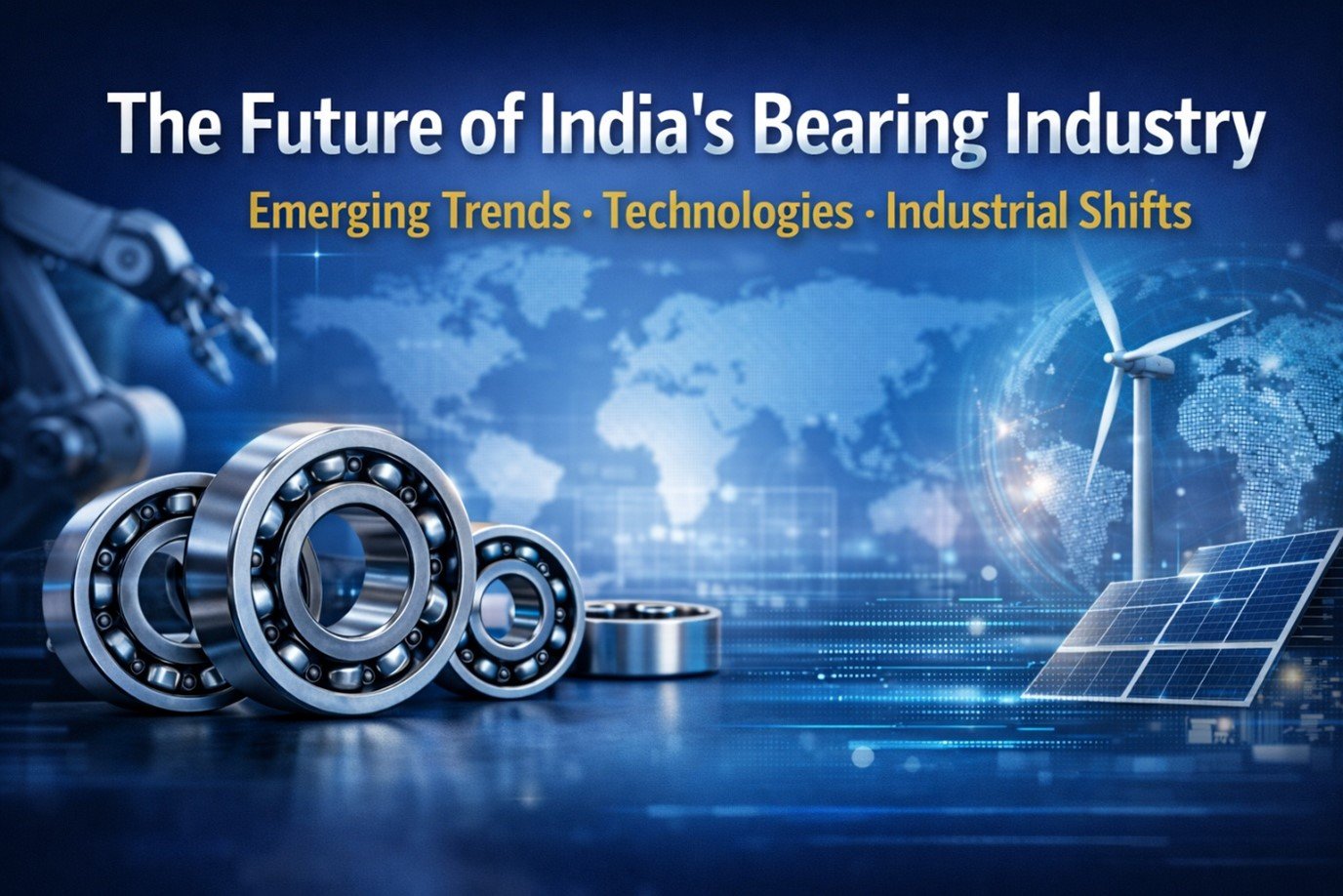
As India accelerates its transition toward advanced manufacturing, the bearing industry is entering a phase defined by precision, reliability, and engineering excellence. With the growth of mobility, automation, clean energy, and high-technology sectors, bearings are no longer perceived as standard mechanical components—they have become critical enablers of next-generation industrial performance.The upcoming Bearing Review, October-December Edition explores these emerging dynamics, highlighting the technological, structural, and operational shifts reshaping the industry.
1. Manufacturing expansion is elevating performance expectations
India’s industrial expansion supported by initiatives such as Make in India and the rapid growth of sectors including automotive, railways, steel, machine tools, and food processing is redefining performance benchmarks for bearings.
Driven by the rapid expansion of EV mobility, robotics, and Industry 4.0 practices, bearing applications today are far more advanced than ever before. Operating environments have become more demanding, and performance expectations now require higher precision, greater durability, and improved thermal and load-handling capabilities.
This shift is fundamentally transforming what OEMs expect from bearing systems in terms of:
• higher precision,
• enhanced durability,
• improved thermal stability, and
• consistent reliability in varying industrial environments.
2. Precision engineering is becoming a core differentiator
Globally, manufacturers are prioritizing steel purity, micro cleanliness, geometric precision, and advanced heat-treatment, factors that directly influence bearing life, consistency, and application suitability. Across the industry, bearing technology has evolved through improvements such as refined internal geometries, enhanced surface engineering, advanced sealing concepts, and smarter lubrication solutions developments that directly contribute to higher operating efficiency and longer component life.
This represents a significant shift from traditional commodity-driven bearing selection to engineering-led specification, especially for sectors requiring high reliability under elevated loads, speeds, or environmental stress.
3. Digitalisation is reshaping inventory, service and technical support
Digital transformation is emerging as a strategic driver for the bearing ecosystem.
According to the latest insights, industry leaders are increasingly adopting data-driven forecasting, advanced inventory planning, digital traceability, and automated warehouse systems that enhance supply chain accuracy and responsiveness.
For industrial buyers, this translates to:
• reduced lead times,
• improved traceability,
• faster technical communication, and
• more predictable availability of critical components.
Digital platforms are also enabling more structured technical support, better documentation, and streamlined customer interaction elements essential for modern engineering environments.
4. Counterfeit mitigation remains a critical industry imperative
The presence of counterfeit bearings in the market remains a serious concern, often resulting in equipment failures, operational safety issues, and unplanned maintenance. This has elevated authenticity verification to a key industry focus.”.
Industry leaders are therefore strengthening:
• direct manufacturer sourcing,
• secure and identifiable packaging,
• QR and batch-code verification, and
• dealer-level training on authentication parameters.
This is fostering a more transparent and controlled procurement environment across the industrial ecosystem.
5. Emerging sectors are driving new product and technology requirements
India’s rapid progress in EV mobility, solar and clean energy, robotics, precision manufacturing, and automated production systems is reshaping the demand for advanced bearing technologies.
From high-speed miniature bearings used in robotics and EV motors to highly engineered spherical roller units suited for heavy-duty industrial environments, application-specific solutions are gaining prominence.
In sectors exposed to challenging environments, ranging from particulate-rich zones to high-heat processes and washdown-dependent operations, bearing solutions increasingly rely on improved sealing, robust materials, and modern lubrication strategies to sustain reliability.
This evolution is leading to:
• greater customisation,
• broader product portfolios, and
• closer collaboration between OEMs, application engineers, and global technology partners.
6. Application engineering expertise is becoming more influential
Selecting a bearing today requires a detailed evaluation of application parameters including load characteristics, speed, misalignment, environmental exposure, and lubrication requirements.
Many end users may not have the resources to assess these nuances, making technical advisory and application-driven recommendations essential for ensuring optimal performance.
Additionally, industry-wide emphasis is growing around:
• training on correct mounting practices,
• prevention of lubrication-related failures,
• understanding sealing requirements, and
• reducing premature breakdowns caused by incorrect handling.
This engineering-centric approach is redefining customer expectations and elevating the value of specialised technical support within the bearing industry.
A Sector Poised for Strategic Transformation
The bearing industry is entering a decade where precision manufacturing, digitalisation, sustainability, and high-performance materials will define competitive advantage.
The December Edition of Bearing Review captures these developments with clarity drawing insights from industry experience, emerging technologies, and evolving operational practices across India’s manufacturing ecosystem.
Don’t Miss the Bearing Review, Oct – Dec Edition. Explore the in-depth analysis, expert perspectives, and forward-looking trends shaping the future of India’s bearing landscape.

