
Export Performance of the Indian Bearing Industry – Some Insights
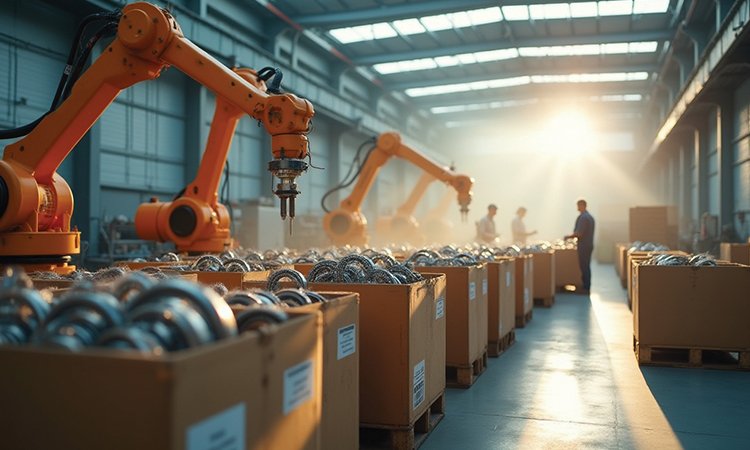
The Indian bearing industry has steadily evolved into a globally competitive sector, with its products finding markets across diverse geographies. Once seen largely as a domestic, cost-driven supplier base, India today exports bearings to more than 50 countries, catering to industries ranging from automotive and railways to industrial machinery, construction equipment, and renewable energy.
With an increasing focus on quality, precision engineering, and innovation, the Indian bearing industry is carving a robust position in the global value chain.
Rising Export Volumes and Market Spread
Exports of bearings from India have shown consistent growth over the past decade. Indian manufacturers are exporting not just to traditional markets like the US, Germany, and the UK, but also to emerging regions in Southeast Asia, Africa, and Latin America.
This diversification of markets has helped de-risk export dependence and created new opportunities in fast-developing economies.
Indian bearings are increasingly being recognized for their balance of quality and cost-effectiveness, which gives them a competitive edge in global supply chains. Many global OEMs are sourcing bearings from India as part of their “China+1” strategy, further driving demand.
Technology and Quality as Differentiators
What distinguishes Indian exporters today is the ability to deliver consistent quality in line with stringent international standards such as ISO, DIN, and AFBMA. Several leading companies have invested in advanced manufacturing infrastructure, automation, and testing facilities to match the demands of sophisticated sectors like aerospace and renewable energy. This transition from cost arbitrage to quality-driven exports marks a significant milestone in the industry’s growth story.
Key Growth Drivers for Exports
The steady rise in exports is not accidental—it is driven by a combination of structural and strategic factors. India’s strong domestic steel and alloy base ensures reliable raw material availability, while competitive labor costs help maintain cost efficiency. Policy support through initiatives like Make in India and the Production Linked Incentive (PLI) schemes has boosted confidence and investment.
Furthermore, Indian bearing manufacturers have demonstrated agility in adopting Industry 4.0, digital quality control, and lean manufacturing practices, which not only improve efficiency but also inspire trust among global buyers. The growing global shift towards diversifying supply chains post-pandemic has further positioned India as a preferred export hub for bearings.
Challenges in Export Competitiveness
Despite its successes, the industry also faces hurdles. Logistics costs remain high compared to global peers, and energy costs affect competitiveness. Currency fluctuations and geopolitical uncertainties create additional risks.
Moreover, some markets impose stringent entry barriers in the form of certifications and trade regulations, which require continuous upgrades in processes and compliance.
Future Outlook
The outlook for Indian bearing exports remains promising. The rising demand for electric vehicles, renewable energy equipment, and high-speed rail systems globally will open up new avenues where precision bearings are indispensable.
Indian manufacturers that invest in R&D, digitalization, and sustainability practices are likely to be at the forefront of these emerging opportunities. Collaborations with international players, establishment of overseas distribution hubs, and building a strong brand identity will further consolidate India’s position in the global market.
Conclusion
The Indian bearing industry has moved from being a low-cost supplier to a globally competitive player with strong growth potential. Exports are no longer just about cost advantages but increasingly about quality, reliability, and technological capability.
With sustained investments in innovation, supply chain resilience, and compliance with international standards, India is poised to emerge as a major bearing export powerhouse in the coming decade.

