
Spherical Bearings – Their Design Features and Applications
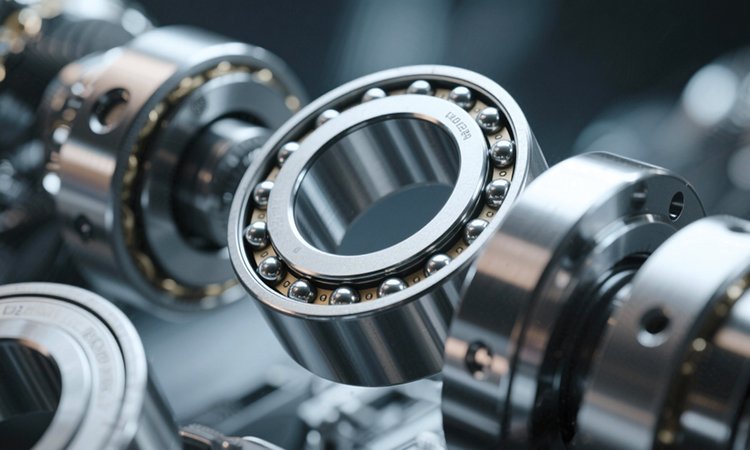
Spherical bearings are specialized mechanical components designed to accommodate angular misalignment and oscillatory motion between connected parts. Unlike conventional bearings that primarily support linear or rotary motion, spherical bearings allow for tilting and rotational movement within a single joint, making them highly versatile in dynamic applications.
Design Features
• Spherical Inner Ring Surface: The core feature is the spherical sliding surface, which permits multi-directional angular rotation.
• Outer Ring Construction: Typically, the outer ring houses the spherical inner, allowing smooth articulation.
• Materials: They are manufactured from high-strength steels, stainless steels, or advanced composites, with surface treatments or coatings for enhanced wear and corrosion resistance.
• Liners and Lubrication: Many spherical bearings include PTFE liners, sintered bronze, or self-lubricating materials, reducing maintenance needs. Others may rely on periodic lubrication depending on load and speed conditions.
• Load Handling: They are designed to handle heavy static and dynamic loads, including shock loads, while compensating for misalignment.
Applications
• Aerospace: Widely used in landing gear, control linkages, and actuators, where they manage both high loads and misalignments.
• Automotive: Found in suspension systems, steering linkages, and gear mechanisms, providing durability under road shocks and vibrations.
• Railways: Applied in bogies, couplings, and suspension assemblies, ensuring stable performance under heavy-duty service.
• Industrial Machinery: Used in hydraulic cylinders, heavy presses, and material-handling equipment for oscillatory and pivoting movements.
• Construction & Mining Equipment: Provide robustness against dust, shock, and uneven loads in arduous working conditions.
• Renewable Energy: Deployed in wind turbines to absorb misalignments and reduce stress on structural components.
Conclusion
Spherical bearings stand out for their ability to combine strength, flexibility, and misalignment tolerance in a compact design. By ensuring smooth motion under demanding conditions, they have become indispensable in aerospace, automotive, railways, heavy engineering, and renewable sectors. Their design innovations—such as self-lubricating liners and advanced materials—are continually expanding their applications in modern engineering systems.

